
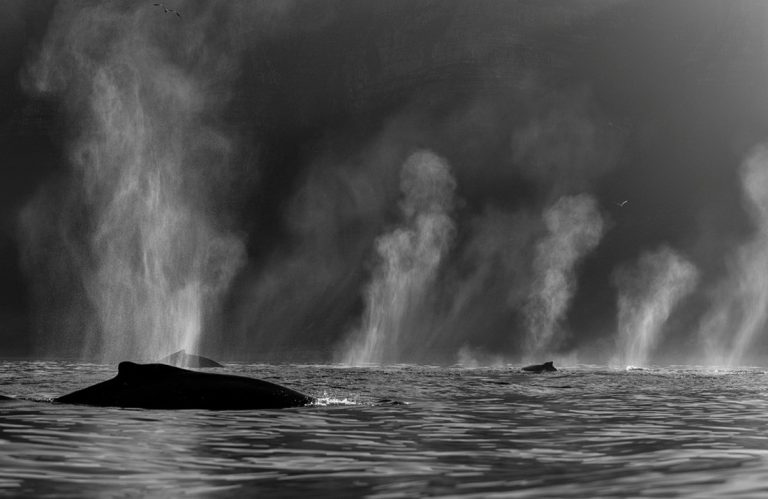
Two of the ocean’s most iconic species …
Two world records …
… and two very different outcomes for each species concerned.
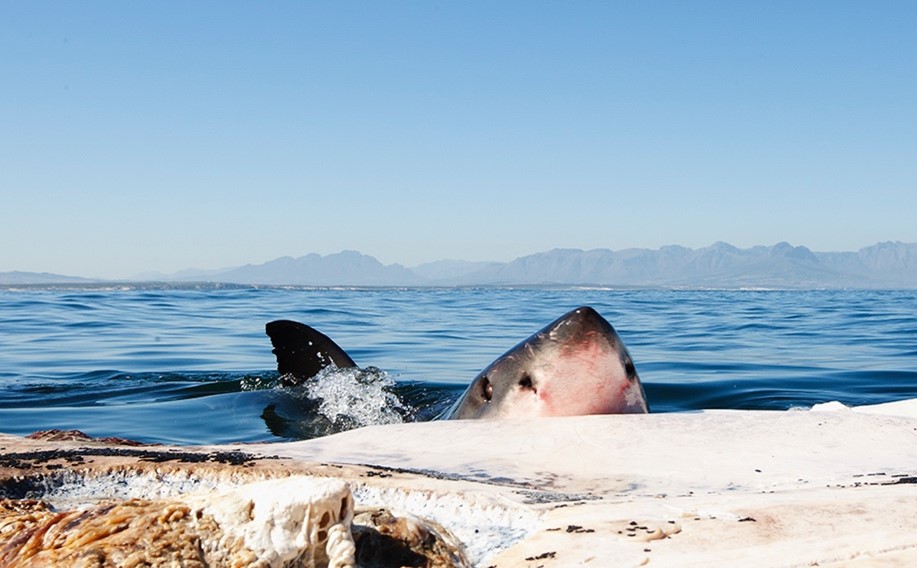
On the 3rd of July 2000, Monique and I recorded no less than 28 very large great white sharks, and possibly as many as 40, around our boat whilst observing the huge sharks feed on a whale carcass at Seal Island, False Bay, South Africa.
This sight, as far as records reflect, was unprecedented and almost certainly the largest aggregation of mostly adult great whites ever recorded in a single sighting.
If that was debatable, then the 10,493 predatory events Monique, our crew and I recorded of great whites feeding on seals over a 22-year period was undoubtedly the largest ever collection of data points relating to the great sharks’ hunting acuity from one location.

Tragically by 2018, these great white sharks along with these records were relegated to the annals of history, unlikely ever to be repeated as now not one remains in False Bay.
A deadly cocktail of antiquated bather protection shark nets and drum lines further up the South African coastline in KwaZulu Natal; and demersal shark longlining along the coastal regions of the Cape South coast, have all but wiped-out South Africa’s most famous marine representative.
As tragic as these physical interventions are, so too is the response by South Africa’s government affiliated shark scientists and others in academia and fisheries management.
They have simply turned a blind eye to these two preventable causes and put all their effort into steering media and public attention towards blaming two orcas, for which no management is necessary.
It’s worth pointing out that in the case of False Bay, these two orcas only appeared on the scene long after the great white population had already crashed.
The reality is that instead of listening to a host of other non-government scientists from within South Africa and around the world, or taking on board observations by eco-tourism operators and citizen scientists, this tragedy, which was decades in the making, could easily have been avoided.
Instead, there was never any collaboration between all parties concerned. There never was a coming together of parties to see how non-lethal measures could be implemented to negate the need for outdated shark nets and drum lines. There never was a coming together of parties to debate the merits of other scientific opinions, or what the public was saying about the damaging and illegal activities the shark longliners were having.
It was tragic scientific politics at its best, where the political and academic interests of a few were put ahead of the saving of a species depended upon by many, both human and ecosystem alike.
This sum of putting self-interest ahead of collaborating for the benefit of the great white is reflected in the zero on today’s scoreboard, plain for all to see.
Roll the clock forward nearly 26 years to the 29th of December 2025 where a new world record was in the making. On this day off the West Coast of South Africa, something very special happened, and again Monique and I had the incredibly unique privilege of being the ones involved.
On this day we photographed a world record number of no less than 208 different humpback whales; the highest number of large whales ever accurately recorded in a single day. Confirmed numbers aside, we estimated there could have been as many as three to four hundred in the general area.
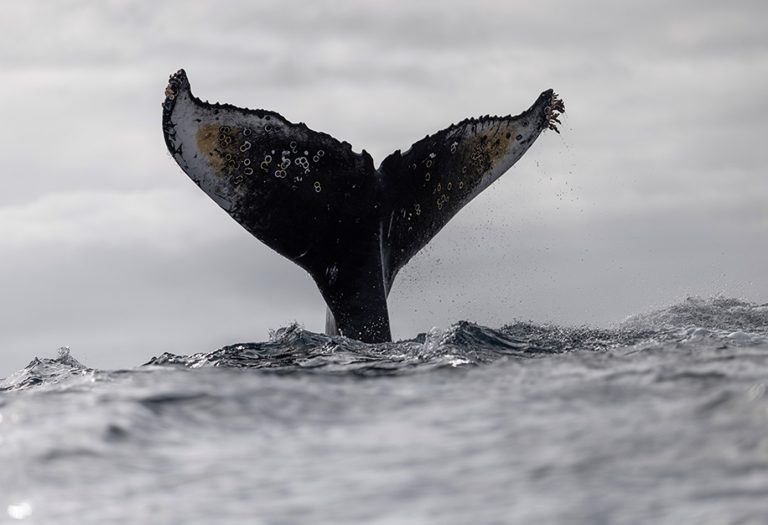
Certainly, no humans since the end of the industrial whaling era in the late 1960’s, and quite possibly before it, have accurately recorded such a concentration of these giants in a small area in one day.
The reasons for this awe-inspiring and heartwarming sight are quite simple.
We as a species acknowledged our mistakes and have become enlightened to the sentience of these animals, realizing that like us they have feelings, personality and a deep caring for their young.
Quite simply, like all creatures, they have as much right to share the planet with us as we do, and we cannot simply extirpate them for our own gain.
Progressively, instead of fighting, whale scientists in South Africa work together with both academic peers, as well as the public, to learn more about the whales. In two simple words … they collaborate.
The results are now there for all to see. In the early 1990’s when I started working with great whites, we hardly saw a humpback whale. Today we have the privilege to photograph hundreds.
In so doing, I for one would like to say a huge thank you to the various scientists working with the whales in South Africa for what one believes is an advancement of knowledge to conserve them.
A thank you to the various boat-based whale operations along the South African west coast, notably Whale Expedition SA and Captain Jacks, who contribute their sightings to science in the form of HappyWhale.
A huge thank you to Alex Vogel who selflessly collates all of these sightings into the HappyWhale data base. By doing so Alex makes them openly accessible for the public to learn from, and get excited about, as to where and what these whales are up to.
A thank you Mdu Seakamela and fellow cetacean scientist at The Department of Forests Fisheries and the Environment who saw the value in working with naturalists and citizens, such as us, as well as the public, fishermen, and so many whale lovers out there who contribute sightings.
This incredible assembly of whales is a great example of what happens when we all care.

For Monique and I to be uniquely involved in two record breaking natural history observations, where 40 very large great white sharks swam around our boat, and seeing more than 200 humpback whales in front of us, is an extraordinary privilege.
Most importantly though, it has given us rare insight into what can and can’t be achieved when science, citizens and above all, attitude, decide the fate and future of a species.